One Impact Can Kill Your Keypad
Your safe weighs hundreds of pounds, but its keypad is housed in thin plastic. One bump during a move, one falling object, one earthquake — and the keypad cracks.
Understand the Threat
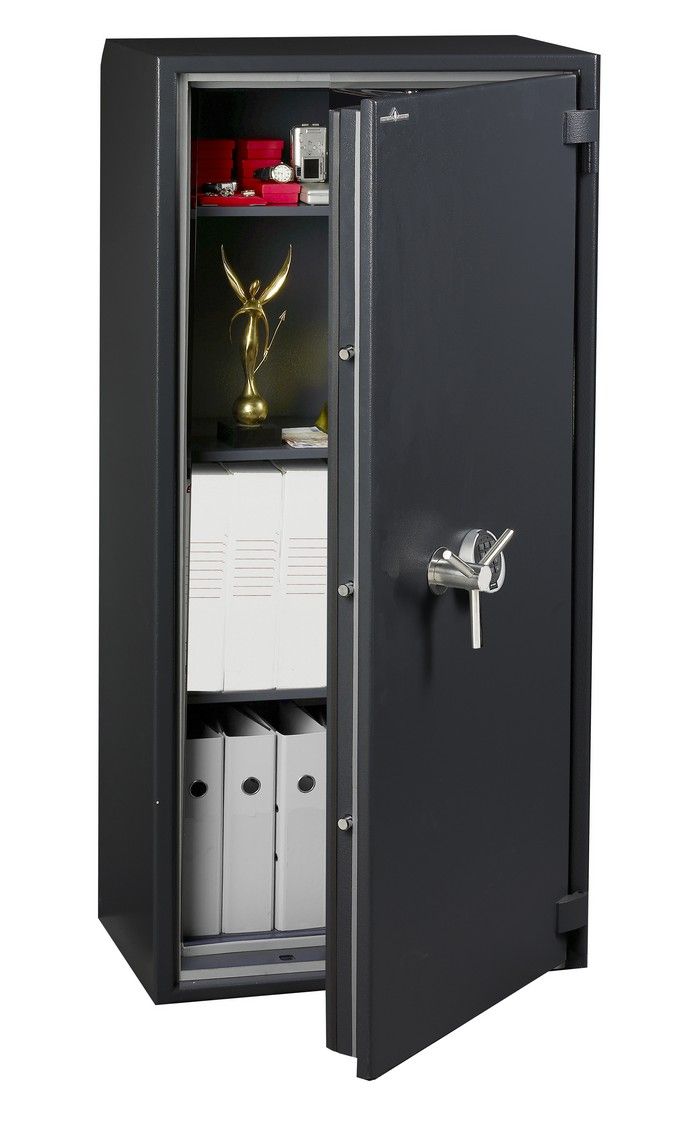

Your safe's keypad is housed in thin ABS plastic that protrudes from the steel door face — designed for ergonomics, not impact resistance. A single bump during a move, a falling tool in a workshop, or objects turned into projectiles during an earthquake can crack the housing, shatter the display, or dislodge internal circuit board connections. Even damage invisible from the outside — cracked solder joints, shifted standoffs — can cause intermittent failures that cascade into permanent keypad death as dust and moisture infiltrate through hairline fractures.
The Problem
The Engineering Contradiction
There is a striking engineering contradiction at the heart of every electronic safe: the body is built from 10-gauge or 12-gauge steel, the door may include hardened anti-drill plates and glass relockers, the bolt work is precision-machined from solid steel — and then the entire system is controlled by a keypad housed in a thin ABS plastic shell that protrudes from the door face like an unprotected target. This keypad housing was designed for button ergonomics and display visibility, not for impact resistance. It is the weakest structural component on the entire safe, and it is the one you interact with every time you open it.
Moving Day: The Most Common Cause
The most common cause of keypad impact damage is moving or relocating the safe. A typical residential gun safe weighs between 400 and 1,200 pounds. Moving one requires a hand truck, furniture dolly, or professional moving crew, and the process involves navigating through doorways, around corners, down staircases, and across thresholds. The keypad, which sits proud of the door surface by an inch or more, is positioned at exactly the height where it catches on doorframes, stair railings, and wall corners. A single impact during transit — the kind that barely scratches the steel body — can crack the keypad housing, shatter the LCD display, or disconnect the ribbon cable that links the keypad to the lock body.
Earthquakes Turn Objects Into Projectiles
Earthquakes represent another significant impact threat, particularly in seismically active regions like the West Coast, the New Madrid zone, and Alaska. During a seismic event, unsecured objects become projectiles. Tools, equipment, storage bins, and heavy items stored near or on top of the safe can fall against the keypad with considerable force. Even the safe itself may shift or topple if not bolted down, and the keypad can strike the floor, a wall, or adjacent furniture. Post-earthquake, safe owners may discover that their keypad is cracked or unresponsive at precisely the moment they need access to emergency supplies, documents, or firearms stored inside.
Garage and Workshop Hazards
Workshop and garage environments present a constant background risk of impact damage. Safes in these locations share space with power tools, lumber, automotive parts, bicycles, ladders, and other heavy objects that are regularly moved, stacked, and repositioned. A sheet of plywood leaning against the safe, a ladder that tips over, a child's bicycle that falls — any of these everyday events can deliver a focused impact to the keypad. Because these impacts often happen when the safe owner is not present, the damage may go unnoticed until the next time they attempt to enter their combination.
Invisible Damage, Cascading Failure
What many safe owners do not realize is that impact damage does not have to be visually obvious to be functionally devastating. A keypad housing can look intact from the outside while harboring internal damage. The circuit board inside the housing is held in place by plastic standoffs and snap-fit tabs that can break under impact, allowing the board to shift or flex. Solder joints on surface-mount components can crack from shock loading, creating intermittent connections that cause erratic behavior — accepted codes that do not open the lock, phantom button presses, or a display that works only when pressed at a certain angle. These symptoms often mimic battery issues or software glitches, leading owners to replace batteries repeatedly before realizing the problem is mechanical.
A cracked keypad housing also creates secondary vulnerability pathways. Even a hairline crack exposes the internal circuitry to dust, moisture, and insects. In garage environments where sawdust, metal filings, and humidity are common, a cracked housing allows these contaminants to accumulate on the circuit board, accelerating corrosion and creating short-circuit risks. What started as minor impact damage can cascade into a complete keypad failure over the following weeks or months as environmental contaminants exploit the breach in the housing. The safe's steel body remains as impenetrable as ever, but the access point — the plastic keypad — has been compromised by a threat the manufacturer never engineered it to withstand.

How CLOAK Solves It
Cerakote Aluminum Shell
Primary Impact BarrierThe outermost layer is a precision-formed aluminum shell that serves as the primary impact barrier. Unlike the ABS plastic of the keypad housing, aluminum absorbs and distributes impact energy across its entire surface area rather than concentrating stress at the point of contact. The Cerakote ceramic-polymer finish adds scratch and abrasion resistance, ensuring the shell maintains its protective integrity through repeated impacts, bumps, and scrapes during moves and everyday use.
Nylon 6/12 Dual-Wall Shell
Structural ReinforcementThe inner structural layer is injection-molded from Nylon 6/12 in a twin-wall configuration, an engineering-grade polymer with high impact strength and rigidity. The dual-wall geometry forms the structural backbone of the shield, distributing impact force evenly across the entire assembly and preventing localized stress from reaching the keypad beneath. Nylon 6/12 was selected specifically for its resistance to cracking under repeated mechanical stress — a critical property that the ABS plastic of standard keypad housings does not offer.
Sacrificial design: CLOAK's two-piece construction means the shield sits over the keypad as a separate, replaceable component. When an impact occurs, the cover absorbs the force — not the keypad. Even if the cover is damaged in an extreme impact event, the keypad underneath remains protected and functional. Replace the cover, not the keypad.
Further Reading
- link Earthquake — Seismic events that turn shelves and tools into projectiles aimed at your keypad
- link Impact resistance — Why ABS plastic cracks while aluminum and Nylon 6/12 absorb force
- link Safe — How safes are engineered for security but leave the keypad as the weakest link
From the Founder
Armor Your Keypad Against Impact
CLOAK's aluminum shell and Nylon 6/12 structure absorb the hits so your keypad does not have to. Order now for $249 with free US shipping. 30-day money-back guarantee on unused units.